
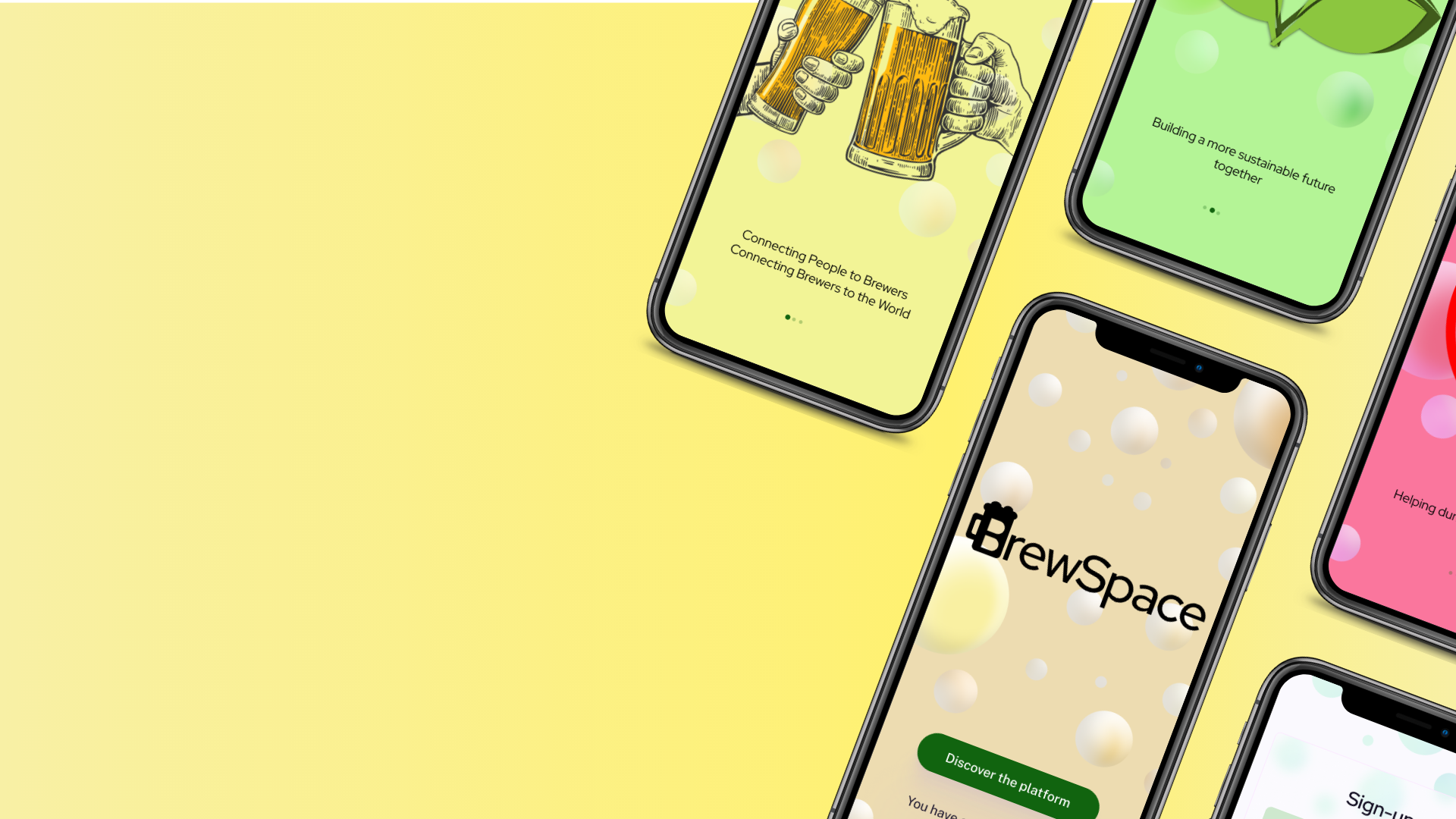
BrewSpace
Overview
BrewSpace is the social media platform that connects small brewers to the world! This platform facilitates connections between brewers, farmers, healthcare professionals, and other small businesses. The goal of the platform is to encourage partnerships that will result in the reuse of brewery waste and that will help brewers source local ingredients. Ultimately, BrewSpace is a formalized point of connection for brewers that serves as an all-in-one space for trading, selling, events, and lifetime connections.
Timeline
10 weeks
Team
Nathaniel S., Robert S., Giana V.
Roles
Product Engineer, User Researcher, Project Manager, Website Manager
Tools
Google Workspace, Journey Maps, Wix, Canva, Figma
Objective
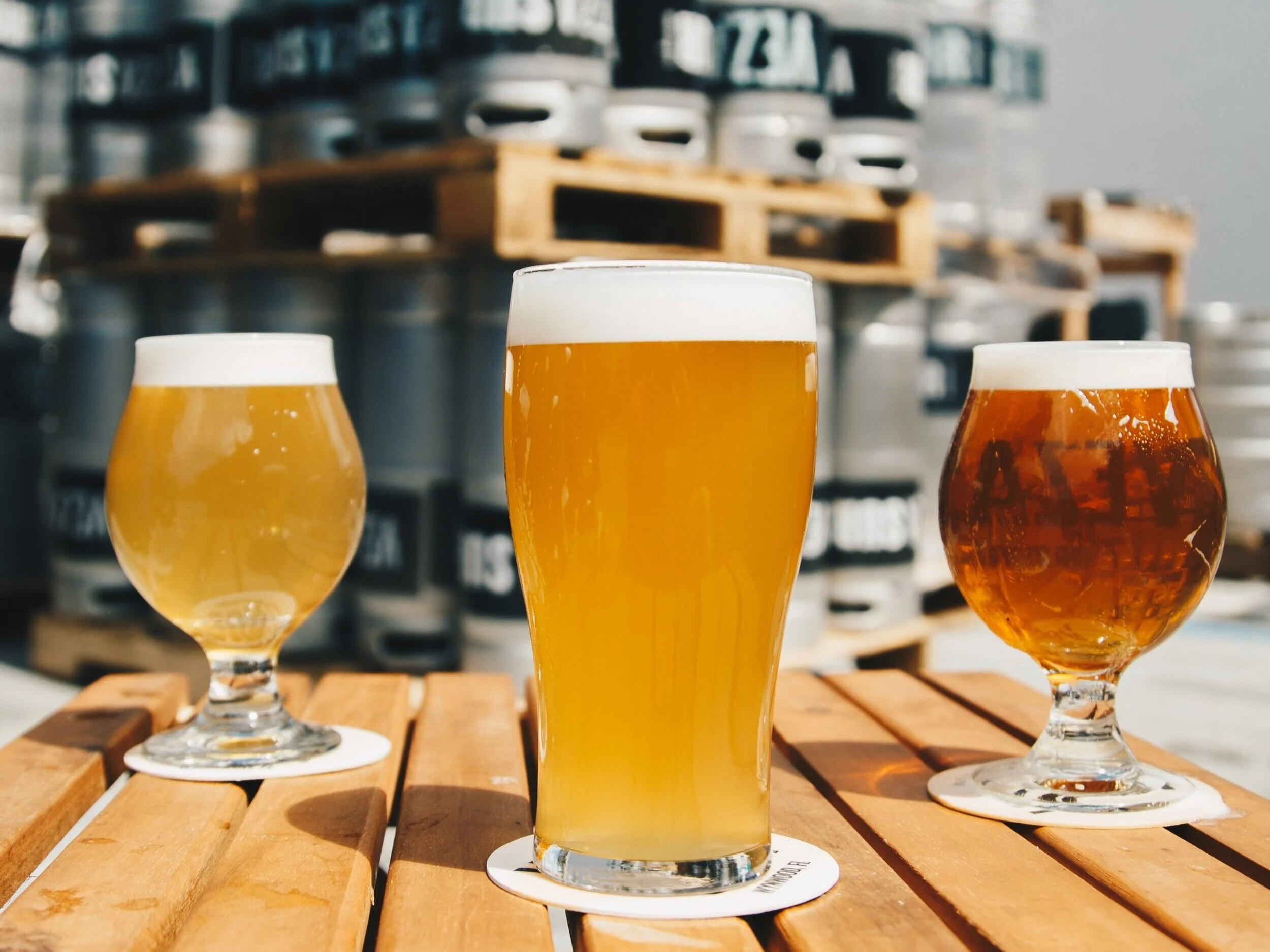
Columbia University’s Introduction to Human-Centered Design and Innovation course challenge was to create a new product or service that would reduce food waste, i.e. waste incurred somewhere in the supply chain as a direct or indirect result of eating or drinking. As beer drinkers that specifically enjoy craft brews, my team and I knew that we wanted to focus on the brewing industry.
Initial Design Opportunity
After some preliminary online research, we learned that some breweries were already doing their part to reduce waste incurred during their brewing process. More specifically, it is very common to find breweries that donate their spent grains to local bakeries and farmers. The bakeries use the spent grains in their baked goods while the farmers use the grains to feed their livestock. We realized then that there existed an opportunity to provide small breweries with better access to resources so that they could get rid of the food waste from their production in a way that aligned with their values.
User Research
In-Person Interviews
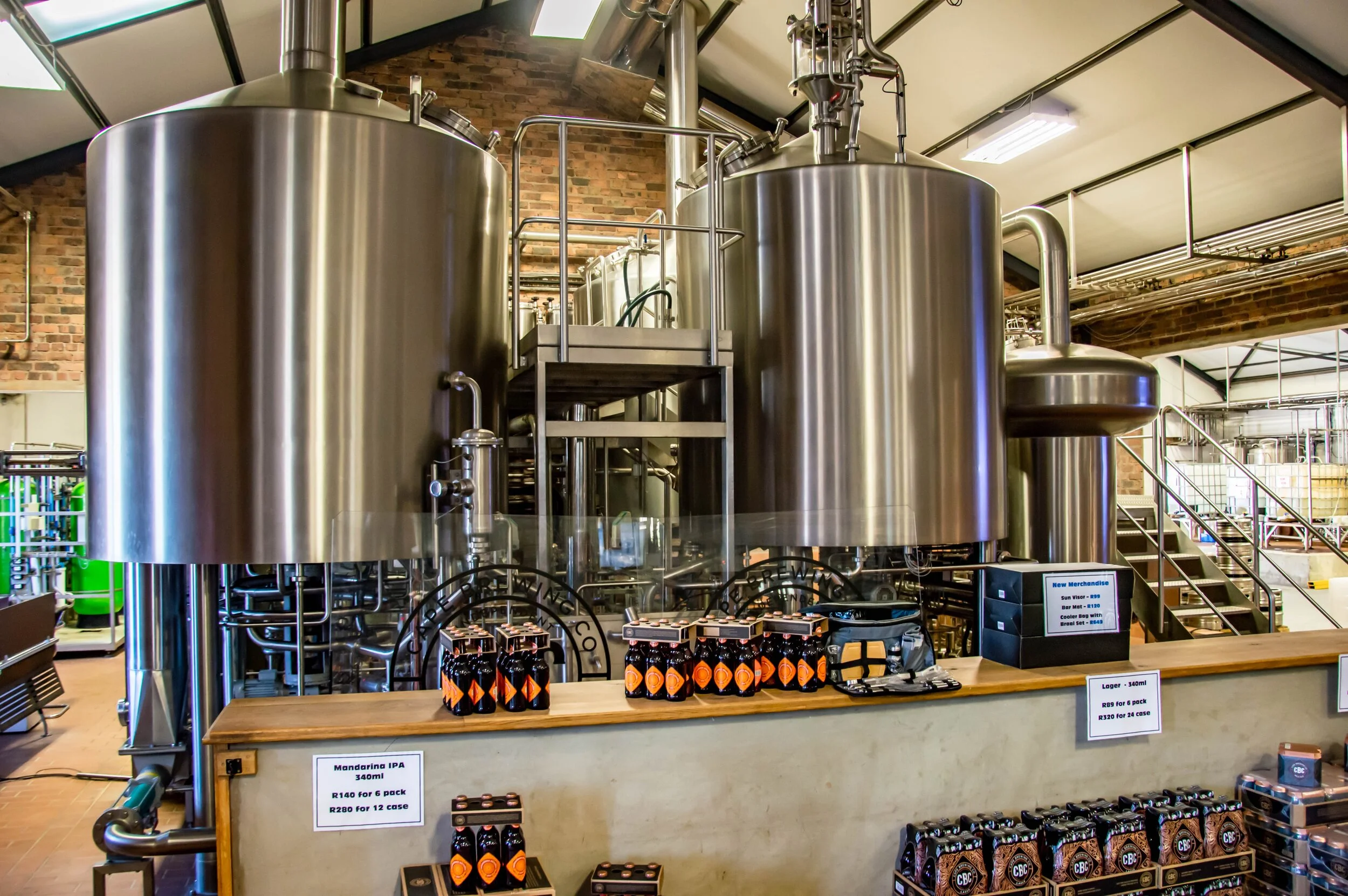
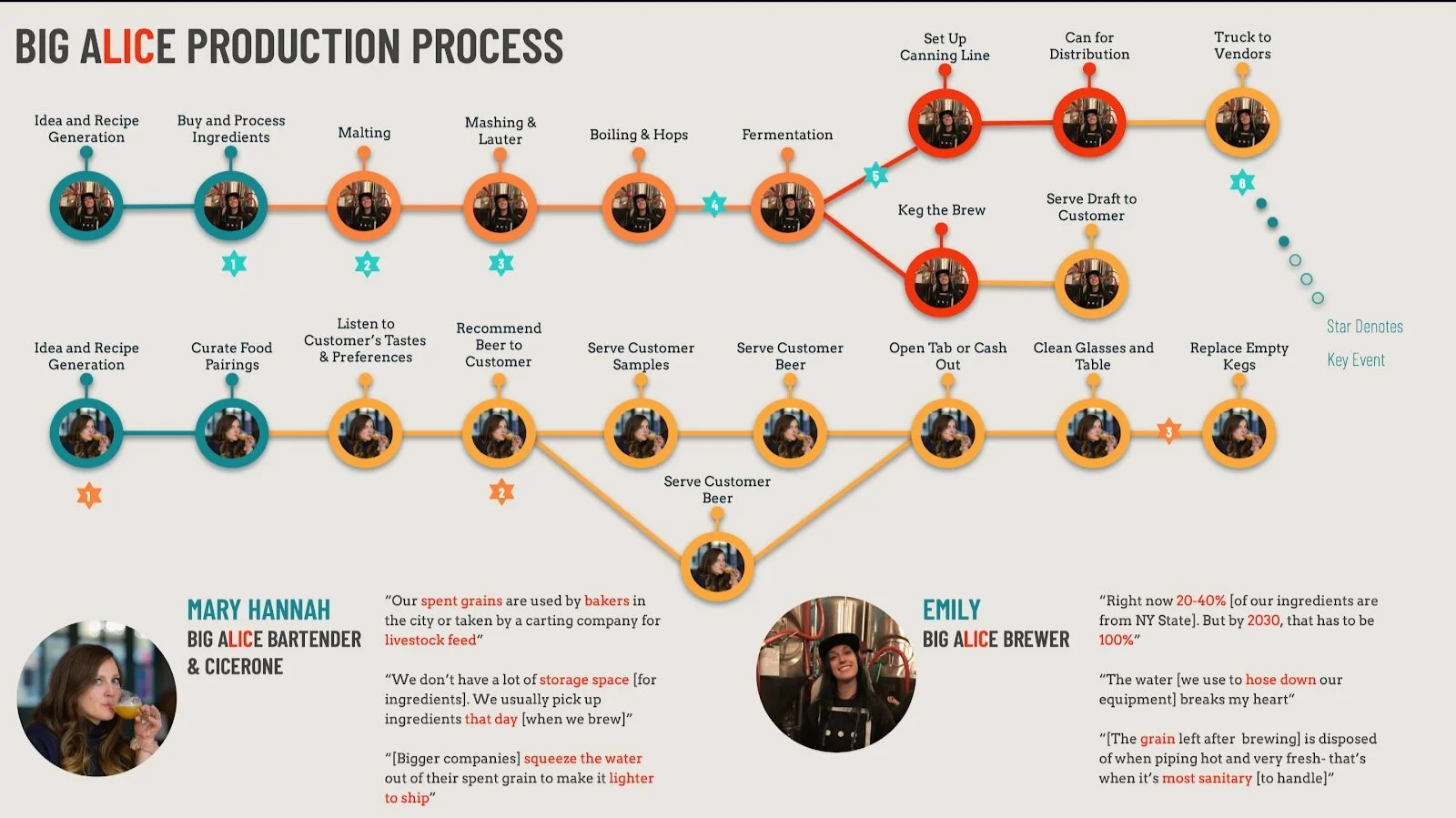
To get a better idea of what kind of service/product would benefit breweries while also reducing food waste, we interviewed three local NYC breweries. This is what they shared with us.
Mary Hannah
Big Alice Bartender and Cicerone

“Our spent grains are used by bakers in the city or taken by a carting company for livestock feed.”
“We don’t have a lot of storage space [for ingredients]. We usually pick up ingredients that day [when we brew].”
“[Bigger companies] squeeze the water out of their spent grains to make it lighter to ship.”
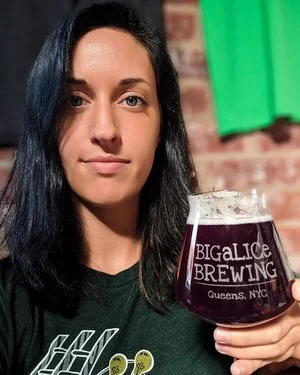
Emily
Big Alice Cellar Person
“Right now 20-40% [of our ingredients are from NY state]. But by 2030, that has to be 100%.”
“The [amount of] water [we use to hose down our equipment] breaks my heart.”
“[The grain left after brewing] is disposed of when piping hot and very fresh — that’s when it’s most sanitary [to handle].”
This is what we noticed.

Little traditional waste is created in the brewing process despite the need for ingredient packaging and disposable plateware.

Grain re-purposing methods are great! But all grain accepting entities are separate and play no other role in the brewing process.
The energy required for storage is minimal. Transportation of beer and canning units, however, requires a lot of fossil fuel energy.

In the brewing process, it seems that more liquid is wasted than solids. Reducing water waste could be beneficial to breweries.
Our in-person interviews shed light on three particular areas our service/product could help minimize food waste in the brewery business.
1) Facilitate connection to brewers to bakers, farmers, and grain suppliers
2) Create an opportunity for better water filtration and recycling
3) Optimize transport of product and materials
Journey Maps
We then took a look at the daily experiences of those that take part in the brewery business, i.e. the brewers, the bartenders, and the craft beer consumer. These journey maps helped highlight where our service/product would be most beneficial.
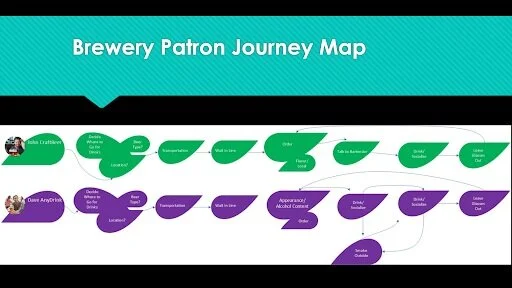
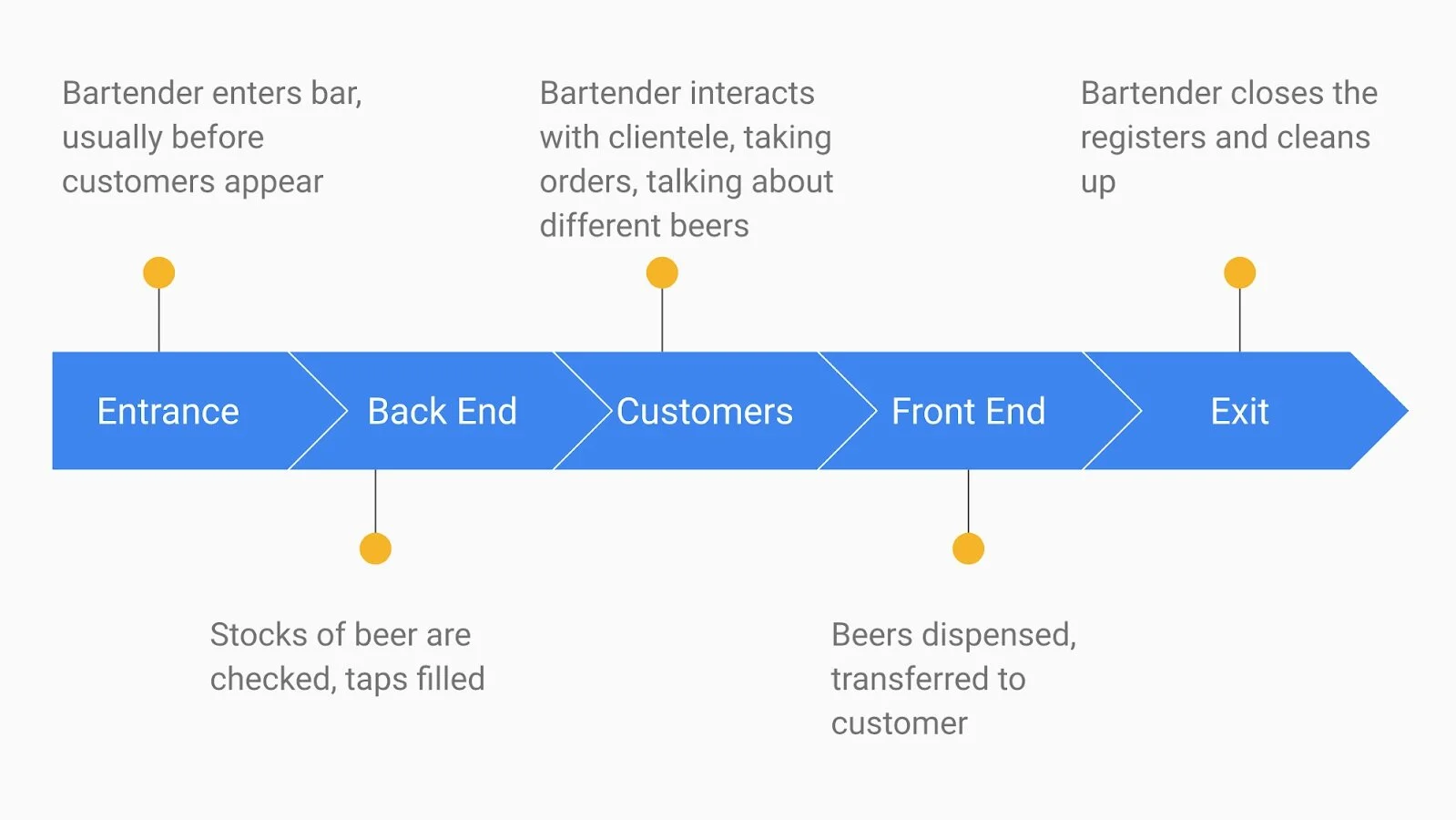
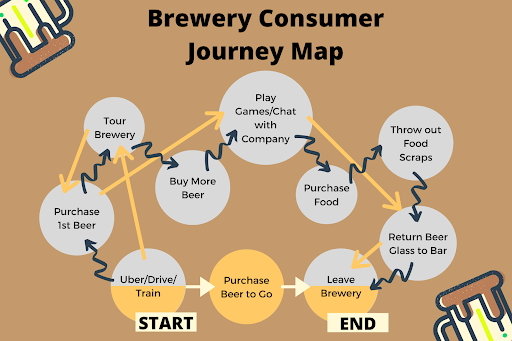
Once we understood the consumer experience, we developed our initial prototypes.
Design Iterations
Prototype 1:
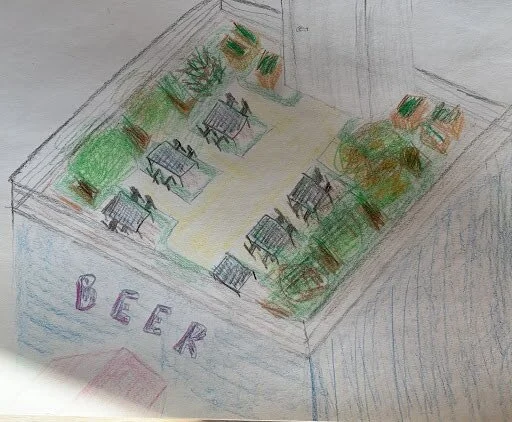
Brewery Rooftop Garden
This idea encourages the use of rooftops as green roof spaces to grow additive ingredients for the breweries’ craft beers. Wastewater from the brewing process would be rerouted to the garden and used to water the plants in the garden. Plus, the scenic rooftop garden could be a great place to host patrons.
Prototype 2:
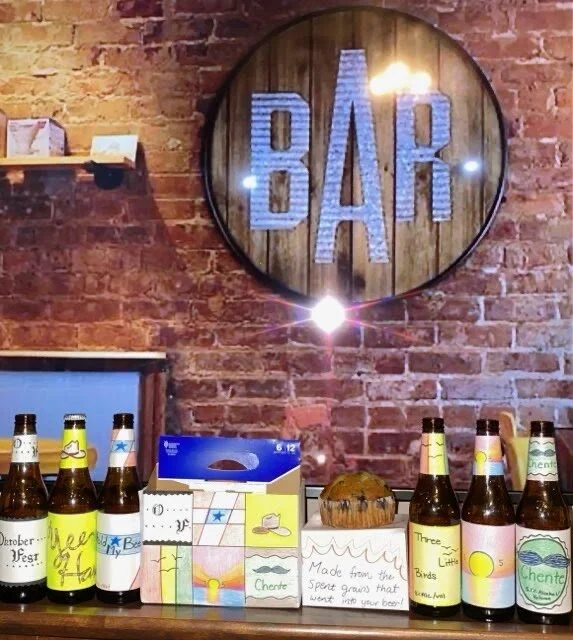
Beer Subscription Box
This product would increase food waste awareness in consumers and encourage them to support their local breweries. The beer subscription box would include 6 different craft beers from 6 different local breweries as well as a baked good made from the spent grains used in the craft beer production.
Prototype 3:
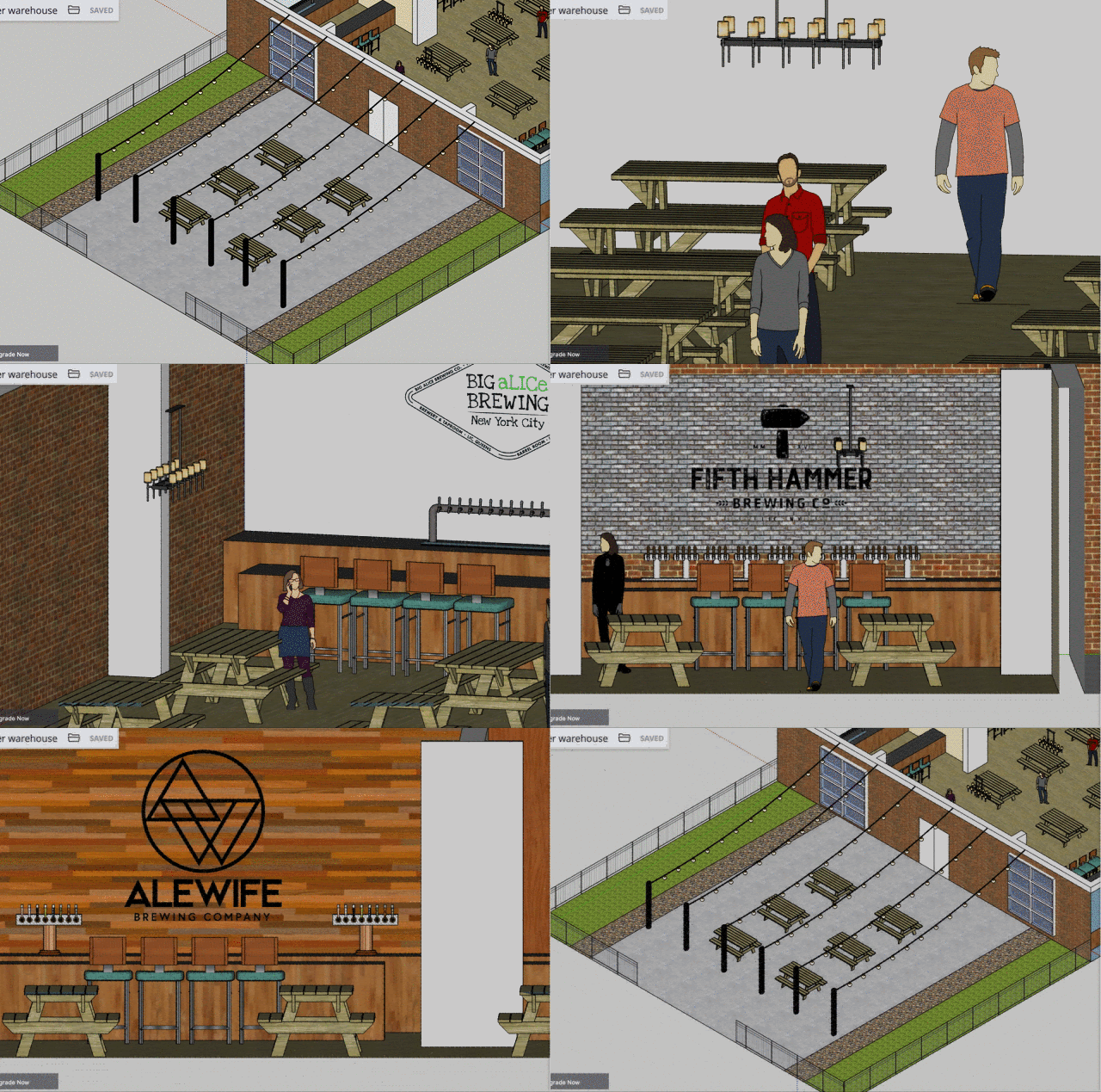
Brewery Co-Working Space
This idea incorporates 6 retail booths and 6 independent brewing stations all within one location. Within this shared space, the brewers would have access to an in-house canning line, group distribution, upkeep, and utilities. This space would give the breweries the opportunity to develop a larger waste recycling infrastructure and encourage resource sharing.
Prototype 4:
BrewSpace
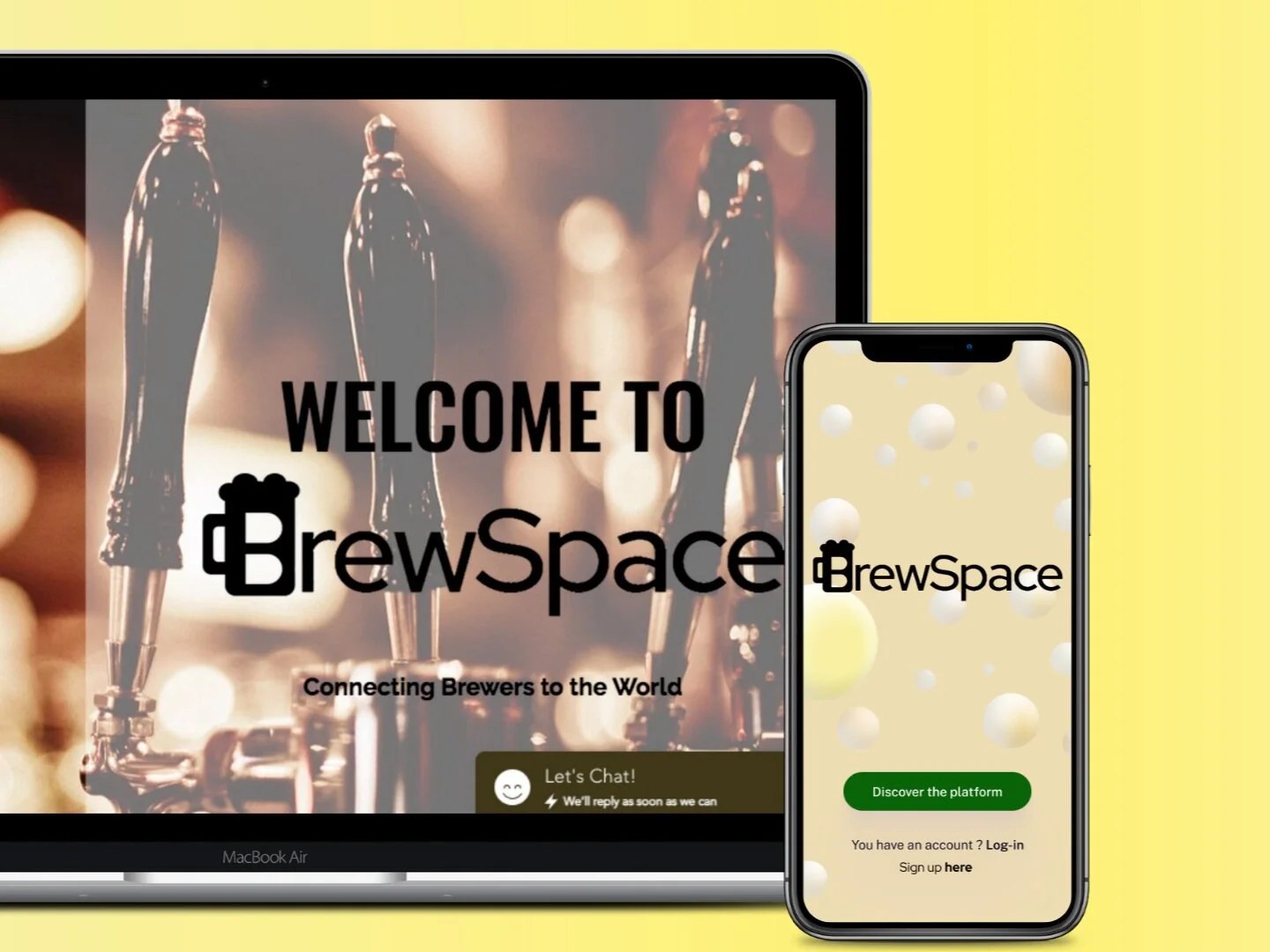
This social media platform promises to reduce food waste by connecting breweries to local businesses that can use the byproducts from their beer production. Once the connection is made, businesses can direct message each other to begin their partnership. The platform would be available as both a website and as an app.
User Feedback
Round 1
We presented our prototypes to a five-person research group of craft beer consumers. We asked them to rate each of the prototypes on a scale of 1-10. The highest-rated prototype was BrewSpace with a final rating of 7.6/10.
Round 2
After receiving feedback from craft beer consumers and narrowing down our prototype choice to BrewSpace, we presented the social media platform to the brewers from Big Alice Brewing Company and to our design professors for additional feedback. This is what they said.
“I like the idea and think it might be more practical for customers than companies ... the carting company is the one who makes connections with farms, not us.”
— Emily
“Your app seems to only be facilitating one-time connections.”
— Turi
“With COVID-19 I’d suggest including charities in need of hand sanitizer and restaurants looking to sell craft brews.”
— Michael
“There doesn’t seem to be an incentive for people to download this to their phones.”
— Harry
“People may just choose not to use it”
— Mary Hannah
Final Product
After receiving feedback from craft beer consumers, brewing experts, and design professionals, we updated BrewSpace to ensure it would be up to consumer standards. Our final product and pitch video can be seen below.

Lessons Learned
Iterate. Iterate. Iterate.
To create the best version of our product, we had to be ready to come back to the drawing board again and again. We paid close attention to the feedback our consumers gave us and iterated our product until it met their satisfaction.
Explore design opportunities in unknown spaces.
I knew very little about the brewing industry when I began this project so it was very exciting to approach this design process from scratch and without bias. It gave my team and me the opportunity to truly let our project be guided purely on the consumer interviews we conducted throughout the semester.
Not all products are great ones, but they’re all learning experiences.
This project was challenging because the breweries we initially spoke with were already leading great initiatives to reduce food waste. Though we noticed that a product that facilitates connections for brewers could come in handy, the final round of feedback we received revealed that the need for BrewSpace would be minimal. Luckily, the project was still an amazing opportunity to build our design skills, conduct user research, and put together different prototypes. Plus, we got to enjoy a few craft beers along the way too!