
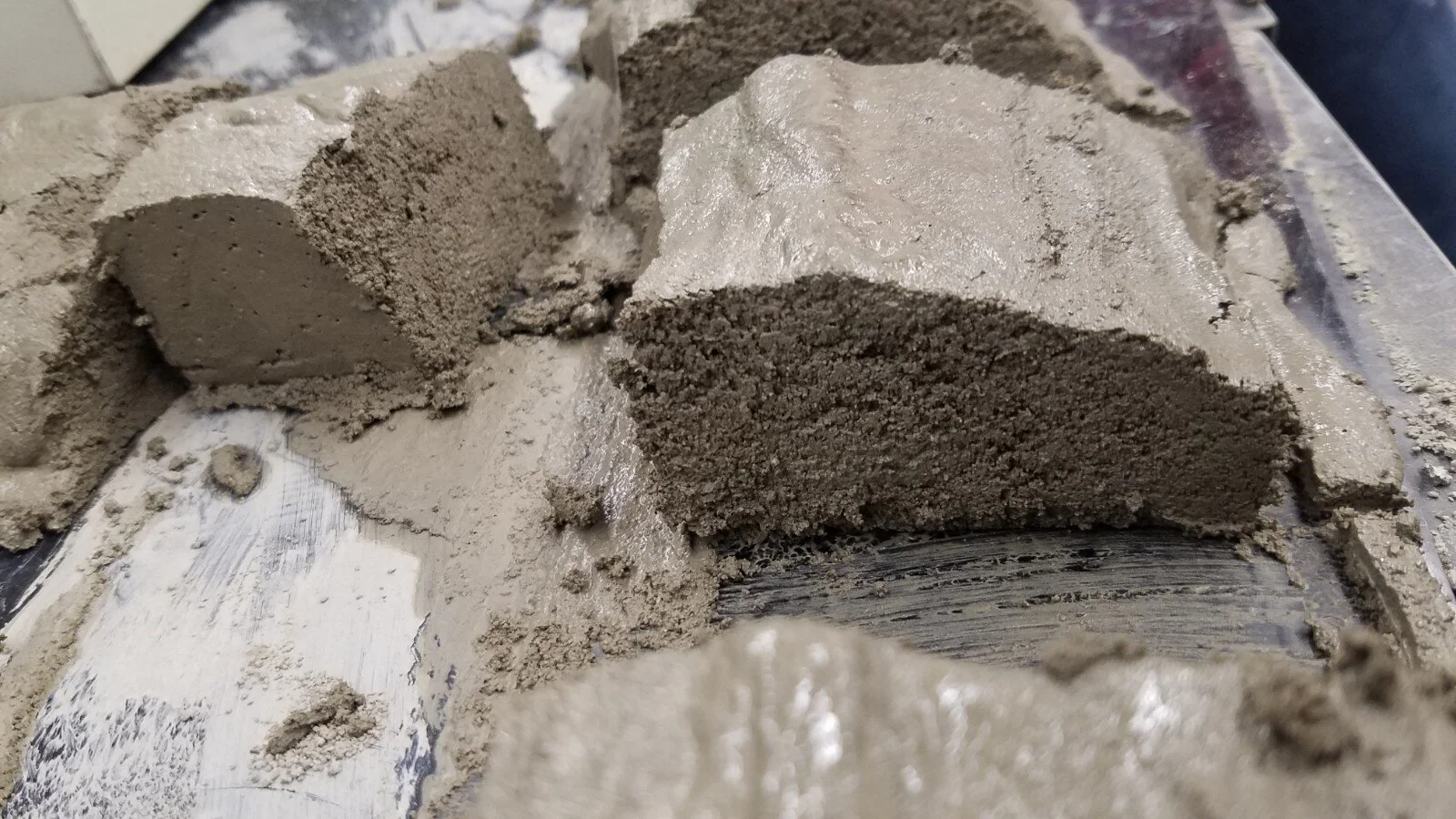
The Caterpillar Project
IMPORTANT NOTE: The CAD images and drawings of this project are to be kept confidential as they are part of an ongoing project at Columbia University’s Robert A. W. Carleton Strength of Materials Laboratory. They have been included in this portfolio with approval in order to showcase my accomplishments and abilities.
Overview
The Caterpillar Project was a summer research project with the aim of fully materializing a novel invention that could be used to further additive manufacturing in the construction industry. Prototype 1 served as a proof of concept. To expand on our design findings, the Fall 2019 semester was dedicated to refining the design and building prototype 2 for patent purposes.
Timeline
Prototype 1: 8 weeks
Prototype 2: 12 weeks
Team
Sabrina C.
Roles
Product Engineer, Undergraduate Researcher, Machinist
Tools
SolidWorks, Onshape, Fusion 360, CNC Mill, Drill Press, Google Workspace
Research
To begin the invention process, it was vital to obtain an in-depth understanding of concrete and its properties. This process led to the decision of working with mortar, i.e.a mixture of cement, sand, and water. This would make it easier to make our machine on a smaller scale.
The second phase of research included familiarizing ourselves with current concrete forming techniques. Our prototypes took inspiration from current slip-forming machines as well as the most current types of concrete 3D printers.
Final Prototypes
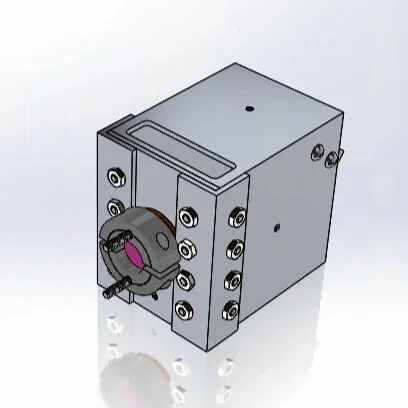
Prototype 1
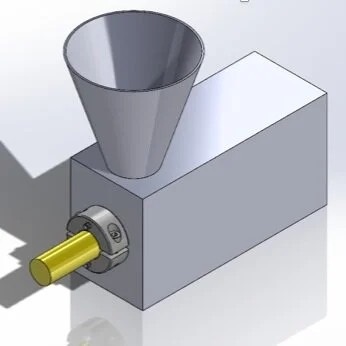
Prototype 2
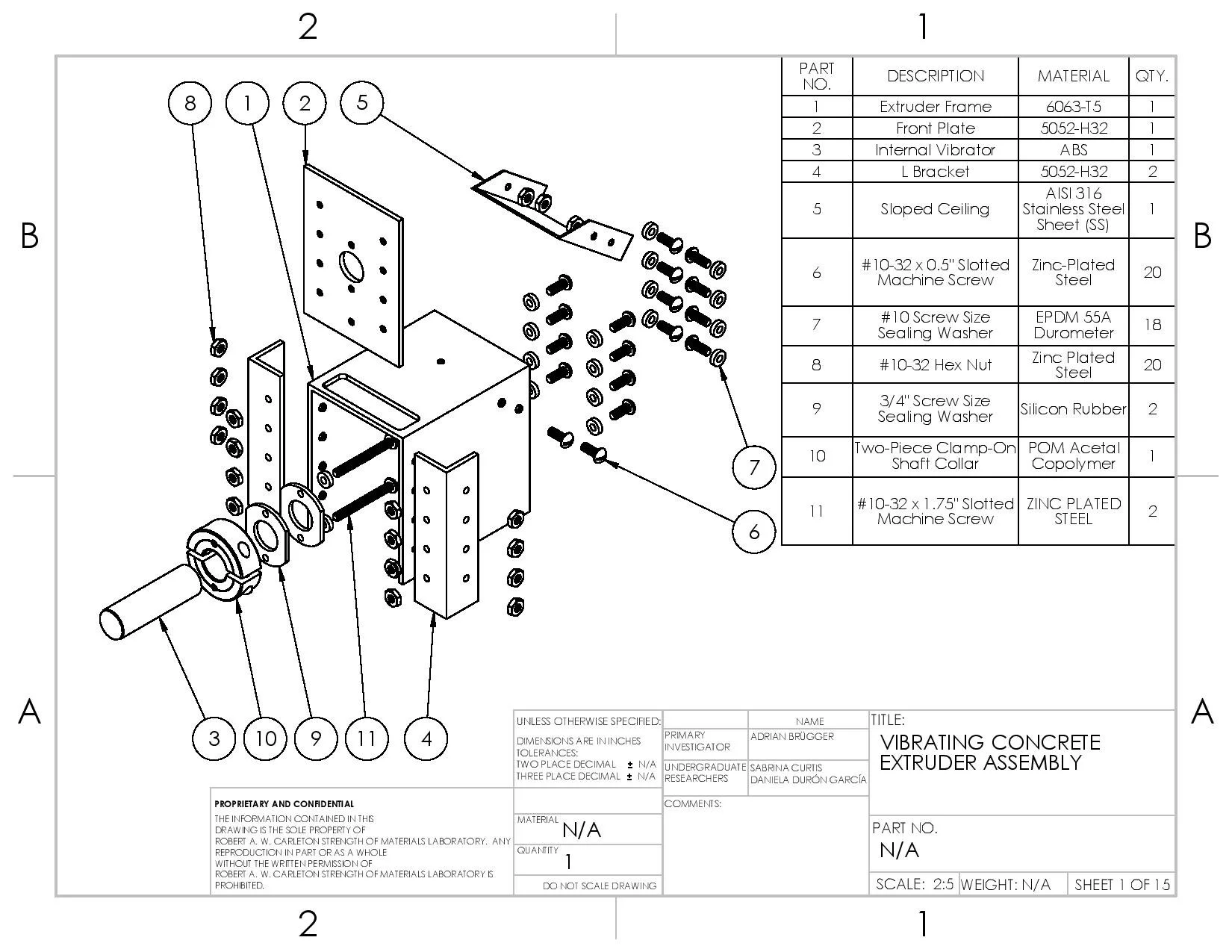
Expanding SolidWorks Skills
We submitted two final reports (one for each prototype) explaining our design decisions and documenting our work through engineering drawings.
The image to the left is one of the fifteen drawings we submitted. This experience not only highlighted the importance of creating neat and clearly labeled drawings, it also left me feeling more confident in my SolidWorks abilities.
Lessons Learned
Seek inspiration from other fields.
One of the biggest challenges we faced was creating a small scale version that would serve as proof of concept because the parts we needed were smaller than standard concrete mixing tools. To solve this problem, we looked at kitchen appliances, oral hygiene tools, and even cell phone components.
When in doubt, test it out.
We considered several versions for prototype 2 and had a hard time deciding which version to build first. We hoped computer simulations would help narrow down our choices, but eventually decided our time was better spent on physical testing. This decision saved us time in the long-run and allowed us to complete prototype 2 by the end of the semester.
Measure twice, cut once.
This project required several unique machined parts. We were able to fabricate most of our pieces in the Mechanical Engineering shop since we had training on all of their CNC machines and other power tools. We quickly realized that preparation and precise measurements would speed up our prototype fabrication and give us more time to test out the different iterations.